We Use CookiesWe use cookies to enhance the security, performance, functionality and for analytical and promotional activities. By continuing to browse this site you are agreeing to our privacy policy

6 Best Hp Scientific Calculators 2025 in the United States

#1

Winner

How do we rank products for you?

Our technology thoroughly searches through the online shopping world, reviewing hundreds of sites. We then process and analyze this information, updating in real-time to bring you the latest top-rated products. This way, you always get the best and most current options available.

headphones-stars

Our Top Picks

#1

Winner

HP 50g Graphing Calculator

Rating
10.0
Chosen by1,500
Functionality
Power Source
Programmability

Most important from
1371 reviews

Functionality
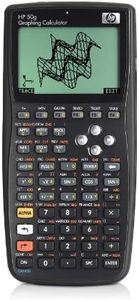
The HP 50g offers a unique and elegant stack system that serves as a universal input-output mechanism, allowing interactive and flexible calculations unmatched by other calculators.
Power Source
Although the device requires four AAA batteries, users recommend investing in rechargeable batteries and backups due to the calculator’s relatively high power consumption.
Programmability
Programming on the HP 50g is streamlined and enjoyable, with the User RPL language enabling quick creation of stack-based programs that integrate seamlessly into calculations.
Durability
Users praise the build quality of new units, noting sturdy battery contacts and a fresh, reliable feel right out of the box.
Ease of Use
Learning to use the HP 50g demands significant time and effort, but the depth of features and programmability make it a rewarding tool for those who master it.

The HP 50g Graphing Calculator is a strong choice for anyone needing a scientific calculator with advanced capabilities, especially students and professionals in engineering or math. Its upgraded display offers 30% more usable space than previous models, making it easier to read complex equations and graphs. The large memory, including 512 KB RAM and 2 MB flash ROM, supports extensive calculations and future software updates, which is a plus for long-term use. The inclusion of an SD card slot for memory expansion is convenient, allowing users to save more data or programs directly on the device.

One standout feature is the flexibility in input methods—you can use RPN (a favorite among HP fans), textbook, or algebraic entry styles, catering to different user preferences. The calculator also comes loaded with over 2300 built-in functions and a bigger equation library, which covers a wide range of scientific and engineering needs. On the downside, the HP 50g uses four AAA batteries, which may require frequent replacement compared to calculators with rechargeable or solar power options. The device is fairly lightweight and portable but slightly larger than some other models, so it might not be the best fit if compactness is a priority.

Although the interface is powerful, beginners might find the programmability and multiple input modes a bit overwhelming at first. However, with some time, users can appreciate the depth of features offered. The HP 50g is well-suited for those who want a robust, versatile scientific calculator with extensive functions and good display clarity, though it might have a steeper learning curve and less convenient power source than some newer alternatives.

Rating
10.0
Chosen by1,500
Functionality
Power Source
Programmability

Most important from
1371 reviews

Functionality
The HP 50g offers a unique and elegant stack system that serves as a universal input-output mechanism, allowing interactive and flexible calculations unmatched by other calculators.
Power Source
Although the device requires four AAA batteries, users recommend investing in rechargeable batteries and backups due to the calculator’s relatively high power consumption.
Programmability
Programming on the HP 50g is streamlined and enjoyable, with the User RPL language enabling quick creation of stack-based programs that integrate seamlessly into calculations.
Durability
Users praise the build quality of new units, noting sturdy battery contacts and a fresh, reliable feel right out of the box.
Ease of Use
Learning to use the HP 50g demands significant time and effort, but the depth of features and programmability make it a rewarding tool for those who master it.
#2

HP 300s+ Scientific Calculator

Rating
9.7
Functionality
Display
Durability

Most important from
257 reviews

Functionality
Functionality is accurate and quick, making it reliable for high school math teaching.
Display
The display is excellent, and the fractional feature helps avoid confusing brackets in calculations.
Durability
While the buttons may occasionally fail to register, paying attention helps mitigate this issue.
Ease of Use
A great deal for the money, this calculator is easy to learn and offers many functions.

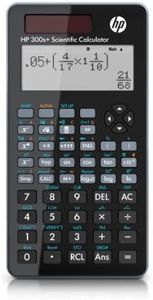
The HP 300s+ Scientific Calculator is designed to cater to the needs of math and science students. It features a linear display with a resolution of 31 x 96 dots, capable of showing up to 15 digits, and comes with a 4-line LCD display in textbook format, making it easy to read complex equations and formulas. The calculator is powered by solar energy with a battery backup, ensuring it works even in low-light conditions, which is a significant advantage for users who need reliability in various environments.

The user-friendly design includes nine memory keys, allowing users to store and recall important results and data efficiently. Weighing just 3.95 ounces and with compact dimensions, it's portable and easy to carry around. However, the lack of advanced programmability might limit its usage for more complex scientific tasks. The durability is decent, but being primarily made of plastic, it may not withstand heavy wear and tear.

The ease of use is enhanced by its intuitive interface, but some users might find the buttons a bit small and closely packed. It is an ideal option for students needing a reliable and straightforward scientific calculator, although professionals might require a more advanced model.

Rating
9.7
Functionality
Display
Durability

Most important from
257 reviews

Functionality
Functionality is accurate and quick, making it reliable for high school math teaching.
Display
The display is excellent, and the fractional feature helps avoid confusing brackets in calculations.
Durability
While the buttons may occasionally fail to register, paying attention helps mitigate this issue.
Ease of Use
A great deal for the money, this calculator is easy to learn and offers many functions.
#3

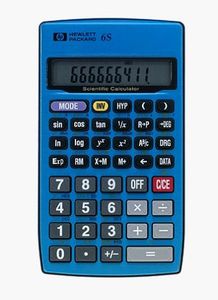
Hewlett Packard HP6S Scientific Calculator

Rating
9.7
Functionality
Ease of Use
Display

Most important from
5 reviews

Functionality
Delivers reliable basic scientific functions including decimal, binary, hex, and octal conversions, making it ideal for students and exam settings where programmable calculators are banned.
Ease of Use
The simple, no-frills design is perfect for beginners who want straightforward scientific calculations without overwhelming features.
Display
The metallic blue finish looks attractive but the button labels are difficult to read in low light due to the color contrast.
Durability
Compact and lightweight, it’s easy to carry around, though the thin design may affect durability over time.

The Hewlett Packard HP6S Scientific Calculator is designed as a straightforward and affordable option for middle-school students or anyone needing basic scientific and mathematical functions. It covers essential trigonometry, algebra, base conversions, and arithmetic, making it suitable for general scientific use without overwhelming complexity. The calculator uses a battery power source, so you don’t need to worry about charging but should be mindful of battery replacement. Its display is simple and clear enough to support easy algebraic entry, helping users input calculations without much trouble. While it lacks advanced programmability features found in higher-end models, this simplicity also makes it easier to use and less intimidating for beginners.

The build is lightweight and compact, which is convenient for carrying around, though the thin design might impact long-term durability if handled roughly. Since it was first released in 1999 and is now discontinued, finding new units could be a bit tricky, and it may not include recent updates or enhancements newer calculators offer. For those seeking a no-frills, reliable scientific calculator for basic schoolwork or simple scientific calculations, the HP6S is a decent choice. Those in need of more advanced functions or a more modern display might want to consider newer models.

Rating
9.7
Functionality
Ease of Use
Display

Most important from
5 reviews

Functionality
Delivers reliable basic scientific functions including decimal, binary, hex, and octal conversions, making it ideal for students and exam settings where programmable calculators are banned.
Ease of Use
The simple, no-frills design is perfect for beginners who want straightforward scientific calculations without overwhelming features.
Display
The metallic blue finish looks attractive but the button labels are difficult to read in low light due to the color contrast.
Durability
Compact and lightweight, it’s easy to carry around, though the thin design may affect durability over time.

Buying Guide for the Best Hp Scientific Calculators

Choosing the right HP scientific calculator can make a significant difference in your studies or professional work. Scientific calculators are essential tools for students, engineers, and professionals who need to perform complex mathematical calculations. When selecting a scientific calculator, it's important to consider your specific needs and the features that will best support your work. Here are some key specifications to consider and how to navigate them to find the best fit for you.
FunctionalityFunctionality refers to the range of mathematical operations and functions the calculator can perform. This is important because it determines what types of calculations you can do. Basic scientific calculators offer essential functions like trigonometry, logarithms, and exponential functions. More advanced models include features like matrix calculations, calculus functions, and statistical analysis. If you're a high school student, a basic model might suffice. However, if you're in college or a professional field that requires advanced math, you should look for a calculator with more comprehensive functionality.
DisplayThe display is the screen where the calculator shows the numbers and results of your calculations. This is important because a clear and large display can make it easier to read and interpret complex calculations. Displays can range from simple single-line screens to multi-line and high-resolution displays. If you need to view multiple steps of a calculation at once or work with graphs, a multi-line or high-resolution display is beneficial. For simpler tasks, a basic single-line display may be sufficient.
Power SourceThe power source of a calculator can be either battery-operated, solar-powered, or a combination of both. This is important because it affects the calculator's usability and convenience. Battery-operated calculators are reliable but require periodic battery replacements. Solar-powered calculators are eco-friendly and can last longer without needing new batteries, but they may not work well in low-light conditions. A combination of both ensures that the calculator works in various lighting conditions. Consider where and how often you'll use the calculator to decide which power source is best for you.
ProgrammabilityProgrammability refers to the ability to write and store custom programs or functions on the calculator. This is important for users who need to perform repetitive or complex calculations frequently. Programmable calculators allow you to automate these tasks, saving time and reducing errors. If you're a student or professional dealing with advanced mathematics, engineering, or computer science, a programmable calculator can be very useful. For basic calculations, programmability may not be necessary.
DurabilityDurability refers to how well the calculator can withstand daily use and potential drops or impacts. This is important because a durable calculator will last longer and provide better value. Look for calculators with sturdy construction, protective cases, and high-quality buttons. If you plan to carry your calculator around frequently, such as in a backpack or to different job sites, durability becomes even more crucial. For stationary use, durability might be less of a concern.
Ease of UseEase of use refers to how user-friendly the calculator is, including the layout of buttons, menu navigation, and overall design. This is important because a calculator that is easy to use can improve efficiency and reduce frustration. Look for calculators with intuitive button layouts, clear labeling, and straightforward menus. If you're new to scientific calculators or prefer a simpler interface, prioritize models known for their ease of use. Advanced users might be comfortable with more complex interfaces that offer greater functionality.

FAQ