We Use CookiesWe use cookies to enhance the security, performance, functionality and for analytical and promotional activities. By continuing to browse this site you are agreeing to our privacy policy

10 Best Nikon Beginner Dslr Cameras 2025 in the United States

How do we rank products for you?

Our technology thoroughly searches through the online shopping world, reviewing hundreds of sites. We then process and analyze this information, updating in real-time to bring you the latest top-rated products. This way, you always get the best and most current options available.

headphones-stars

Our Top Picks

#1

Winner

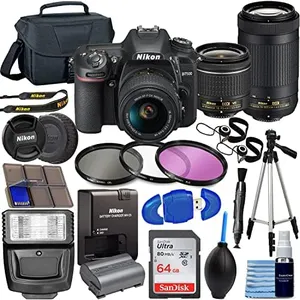
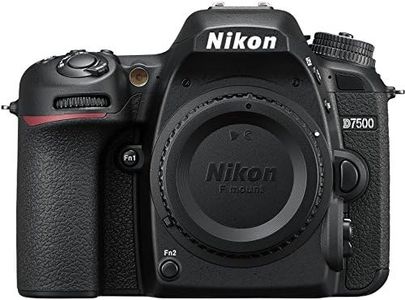
Nikon D7500 20.9MP DSLR Camera with AF-S DX NIKKOR 18-140mm f/3.5-5.6G ED VR Lens, Black

Rating
10.0
Chosen by1,348
Autofocus System
Video Capabilities

Most important from
1685 reviews

Autofocus System
The camera delivers fast, accurate autofocus that makes capturing sharp, low-noise photos effortless even in Auto mode.
Video Capabilities
4K video recording produces clear, sharp footage that meets the needs of serious videographers at 30fps.

The Nikon D7500 is a solid choice for beginners ready to step into more serious photography. It offers a very good 20.9-megapixel APS-C sensor, which captures sharp and detailed images. Its ISO range is wide, from 100 to 51200, helping you shoot well in various lighting conditions—from bright daylight to dim indoors. The autofocus system is quite advanced, with 51 focus points including 15 cross-type sensors, making it easier to lock onto your subject whether it’s still or moving. Plus, it shoots continuously at 8 frames per second, which is helpful if you want to capture action or fast moments. The tilting 3.2-inch touchscreen LCD makes navigating menus and reviewing photos more user-friendly, and the camera supports 4K video recording for crisp, high-resolution clips.

Connectivity options like Wi-Fi and Bluetooth allow easy sharing of your photos and remote control from a smartphone. The included 18-140mm lens is versatile, covering wide-angle to telephoto shots, suitable for landscapes, portraits, and everyday use. The camera might feel a bit complex at first due to its many features and manual controls, which could overwhelm absolute beginners who want a simple point-and-shoot experience. While it has digital image stabilization, it lacks in-body stabilization, so handheld shots in low light might need a steady hand or tripod. The Nikon D7500 is a powerful and flexible DSLR that can grow with you as you learn photography, offering excellent image quality and useful video features, though it requires some time to get comfortable with its settings.

Rating
10.0
Chosen by1,348
Autofocus System
Video Capabilities

Most important from
1685 reviews

Autofocus System
The camera delivers fast, accurate autofocus that makes capturing sharp, low-noise photos effortless even in Auto mode.
Video Capabilities
4K video recording produces clear, sharp footage that meets the needs of serious videographers at 30fps.
#2

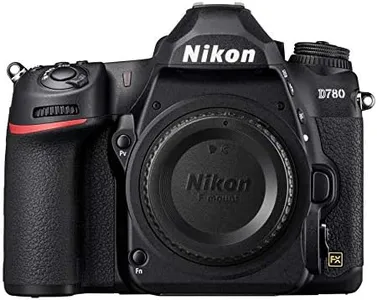
Nikon D780 Body

Rating
9.1
Autofocus System
Video Capabilities
Ease of Use

Most important from
222 reviews

Autofocus System
The Nikon D780 is a beast with great, fast autofocus and incredible low-light performance.
Video Capabilities
For photographers who have been using the D750, the D780 provides a great video upgrade.
Ease of Use
The camera's rearranged buttons and touch screen are highly appreciated, enhancing usability.

The Nikon D780 Body is a solid choice for aspiring photographers stepping into the world of DSLR cameras. With its 24.5 MP resolution and full-frame sensor, it captures high-quality images and 4K UHD videos. The EXPEED 6 image processing engine ensures efficient performance, while the 51-point autofocus system and continuous shooting speed of 7 frames per second (fps) make it suitable for capturing fast-moving subjects. For beginners, the camera offers ease of use with various automatic modes and the intuitive SnapBridge app for wireless connectivity, allowing easy transfer of images to smartphones and tablets.

Additionally, the camera supports long exposures without a remote, adding to its convenience. However, it lacks built-in image stabilization, which might pose challenges for handheld shooting. The camera's ISO range extends up to 204800, providing excellent low-light performance, although beginners might find it overwhelming initially. The 3.2-inch tilting touchscreen with high resolution makes navigation and framing shots straightforward.

On the downside, the camera is relatively heavy at 710 grams, which may be cumbersome for prolonged use. Moreover, the absence of a built-in flash means you'll need external accessories for low-light situations. Despite these minor drawbacks, the Nikon D780 is versatile and well-suited for beginners who aim to explore both photography and videography with room to grow their skills.

Rating
9.1
Autofocus System
Video Capabilities
Ease of Use

Most important from
222 reviews

Autofocus System
The Nikon D780 is a beast with great, fast autofocus and incredible low-light performance.
Video Capabilities
For photographers who have been using the D750, the D780 provides a great video upgrade.
Ease of Use
The camera's rearranged buttons and touch screen are highly appreciated, enhancing usability.
#3

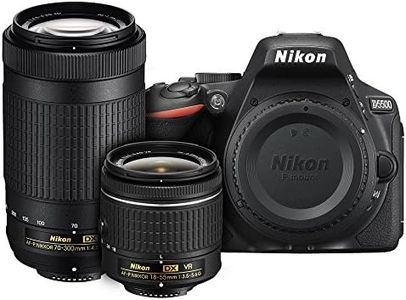
Nikon D5300 24.2 MP CMOS Digital SLR Camera with 18-55mm f/3.5-5.6G ED VR Auto Focus-S DX NIKKOR Zoom Lens (Black)

Rating
8.8
Megapixels
Ease of Use
Connectivity

Most important from
1108 reviews

Megapixels
Its 24+ megapixel sensor offers a noticeable step up in detail compared to older models, enhancing photographic possibilities.
Ease of Use
The menu system is more complex than entry-level cameras, but this complexity brings a multitude of new features for creative control.
Connectivity
The flip-out vari-angle screen combined with built-in Wi-Fi makes shooting from different angles and sharing photos effortless and fun.
ISO Range
ISO performance up to 12800 is impressive, with less noise at higher ISOs compared to older Nikon models.

The Nikon D5300 is a solid choice for beginners stepping into DSLR photography. It features a 24.2-megapixel APS-C sensor that captures detailed and vibrant images without an optical low-pass filter, helping photos look sharp. The ISO range from 100 to 12,800 (expandable to 25,600) means it performs well in various lighting, though very high ISO settings might introduce some noise. Its 39-point autofocus system with 3D tracking is quite advanced for a beginner camera, making it easier to keep moving subjects in focus. You can shoot up to 5 frames per second, which is good for capturing action moments but not the fastest available.

The 3.2-inch vari-angle LCD screen is helpful for shooting at different angles and makes navigating menus more intuitive. Video capabilities include full HD 1080p at several frame rates, suitable for casual video recording. Built-in Wi-Fi and GPS add convenience for sharing photos and geotagging, which is nice for travel photography. However, the camera does not have in-body image stabilization, so you'll rely on lens stabilization or steady hands. The viewfinder uses a pentamirror rather than a pentaprism, which is common in entry-level models but offers a slightly dimmer view. Battery life is decent, lasting about 600 shots per charge.

The D5300 effectively balances image quality, features, and ease of use, making it a dependable camera for beginners wanting to improve their skills without being overwhelmed.

Rating
8.8
Megapixels
Ease of Use
Connectivity

Most important from
1108 reviews

Megapixels
Its 24+ megapixel sensor offers a noticeable step up in detail compared to older models, enhancing photographic possibilities.
Ease of Use
The menu system is more complex than entry-level cameras, but this complexity brings a multitude of new features for creative control.
Connectivity
The flip-out vari-angle screen combined with built-in Wi-Fi makes shooting from different angles and sharing photos effortless and fun.
ISO Range
ISO performance up to 12800 is impressive, with less noise at higher ISOs compared to older Nikon models.

Buying Guide for the Best Nikon Beginner Dslr Cameras

Choosing the right DSLR camera as a beginner can be a daunting task, but with the right guidance, you can find a model that suits your needs and helps you grow as a photographer. When selecting a Nikon beginner DSLR camera, it's important to consider several key specifications that will impact your photography experience. Understanding these specs will help you make an informed decision and ensure that you get the best camera for your needs.
MegapixelsMegapixels refer to the resolution of the camera's sensor, which determines the amount of detail the camera can capture. Higher megapixels mean more detail, which is important if you plan to print large photos or crop images without losing quality. For beginners, a camera with 16-24 megapixels is usually sufficient, as it provides a good balance between image quality and file size. If you are just starting out and mainly sharing photos online, you don't need the highest megapixel count available.
Sensor SizeThe sensor size affects the camera's ability to capture light and detail. APS-C sensors are common in beginner DSLRs and offer a good balance between image quality and cost. Full-frame sensors provide better low-light performance and depth of field control but are typically found in more advanced and expensive models. For beginners, an APS-C sensor is usually the best choice as it offers excellent image quality and is more affordable.
ISO RangeISO range determines the camera's sensitivity to light. A wider ISO range allows you to shoot in various lighting conditions, from bright sunlight to low-light environments. For beginners, a camera with an ISO range of 100-25600 is generally sufficient. This range will give you the flexibility to shoot in different lighting situations without introducing too much noise (graininess) into your photos. If you plan to shoot a lot in low light, look for a camera with good high ISO performance.
Autofocus SystemThe autofocus system helps you achieve sharp focus on your subjects quickly and accurately. A good autofocus system is crucial for capturing fast-moving subjects, such as in sports or wildlife photography. Beginner DSLRs typically have fewer autofocus points than advanced models, but they are still capable of delivering sharp images. Look for a camera with at least 9-11 autofocus points, which should be sufficient for most beginner needs. If you plan to shoot a lot of action or moving subjects, consider a model with more autofocus points and better tracking capabilities.
Continuous Shooting SpeedContinuous shooting speed, measured in frames per second (fps), indicates how many photos the camera can take in a burst. This is important for capturing fast-moving subjects or action shots. For beginners, a continuous shooting speed of 3-5 fps is usually adequate. If you are interested in sports or wildlife photography, you might want to look for a camera with a higher fps rate to ensure you don't miss any critical moments.
Video CapabilitiesMany beginner DSLRs offer video recording capabilities, which can be a great addition if you want to capture both photos and videos. Look for a camera that can record in at least Full HD (1080p) resolution. Some models also offer 4K video recording, which provides higher resolution and more detail. If video is important to you, consider the camera's video features, such as frame rates, autofocus during video recording, and microphone input for better audio quality.
Ease of UseAs a beginner, you want a camera that is easy to use and has a user-friendly interface. Look for a model with intuitive controls, a clear menu system, and helpful features like guide modes or tutorials. Some cameras also offer touchscreen interfaces, which can make navigating settings and reviewing photos more convenient. The ease of use will help you learn and enjoy photography without getting frustrated by complex controls.
ConnectivityConnectivity options, such as Wi-Fi, Bluetooth, and NFC, allow you to easily transfer photos to your smartphone or computer for sharing and editing. These features can be very convenient for beginners who want to quickly share their photos on social media or back them up. Look for a camera with built-in connectivity options to streamline your workflow and make it easier to manage your photos.

FAQ